

PMS “Pick Your Magnesium” Mini Flowchart (Answer Box)
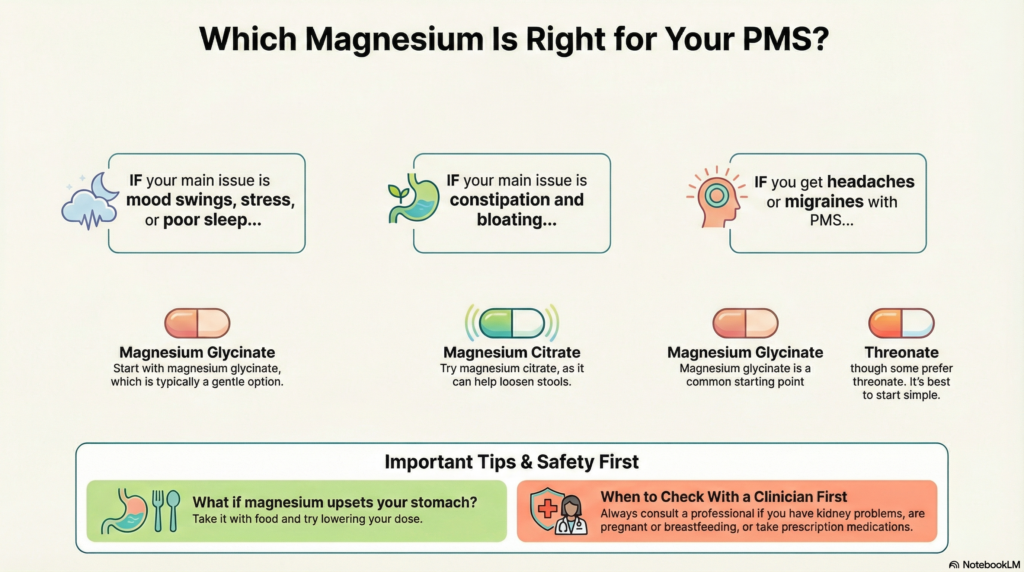
If your main PMS issue is mood swings / stress / poor sleep → start with magnesium glycinate (usually gentle).
If your main PMS issue is constipation + bloating → try magnesium citrate (can loosen stools).
If you get headaches/migraines with PMS → glycinate is a common start (some prefer threonate, but start simple).
If magnesium upsets your stomach → take with food and lower the dose.
If you have kidney problems, are pregnant/breastfeeding, or take prescription meds → check with a clinician first.
Listen to the podcast for using Magnesium for PMS Relief:
10 “Answer box” FAQs
1) Can magnesium help PMS?
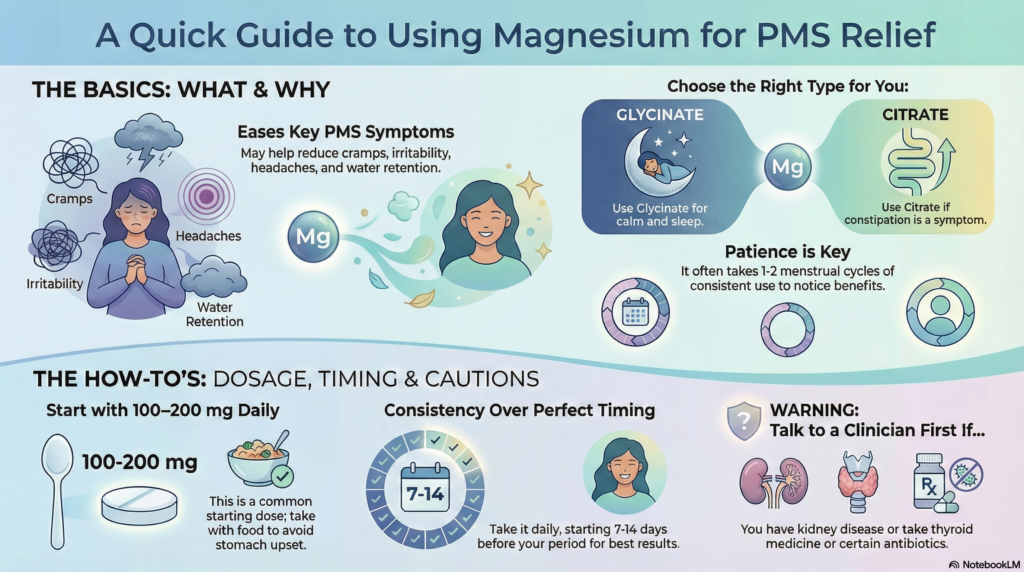
Yes, it may help. Magnesium supports muscle relaxation and the nervous system, which may reduce cramps, irritability, headaches, and water retention in some people. Many see benefits after 1–2 cycles of consistent use.
2) What type of magnesium is best for PMS?
Many people start with magnesium glycinate because it’s often gentle and supports calm + sleep.
If constipation is part of PMS, magnesium citrate may help—but it can loosen stools.
3) How much magnesium should I take for PMS?
A common starting range is 100–200 mg per day (elemental magnesium). If tolerated, some go to 200–300 mg/day. Follow the label and avoid high doses if you have kidney issues.
4) When should I take magnesium for PMS?
For PMS, daily consistency usually works best. Some people take it all month, while others start 7–14 days before their period and continue through the first day or two.
5) How long does magnesium take to work for PMS?
Some notice calmer evenings within a few days, but PMS improvements often take 2–4 weeks or 1–2 menstrual cycles to judge fairly.
6) Can magnesium reduce period cramps?
It might. Magnesium helps muscles relax, which may ease cramps—especially when taken before the period starts rather than only on cramp day.
7) Can magnesium help PMS mood swings and irritability?
Possibly. Some people feel less anxious or snappy with magnesium, especially glycinate in the evening.
8) Can magnesium help PMS bloating?
It can help some people—especially if bloating is linked to constipation, poor sleep, or stress.
9) What are magnesium side effects for PMS?
Most common: loose stools, especially with citrate or higher doses. Also possible: nausea or stomach upset. Fix: lower the dose and take with food.
10) Who should be careful with magnesium for PMS?
Talk to a clinician first if you:
- Have kidney disease
- Take thyroid medicine (separate by at least 4 hours)
- Take certain antibiotics (separate by 2–6 hours, depending on the medicine)
- Are pregnant or breastfeeding
Optional: “How to use it” (super short)
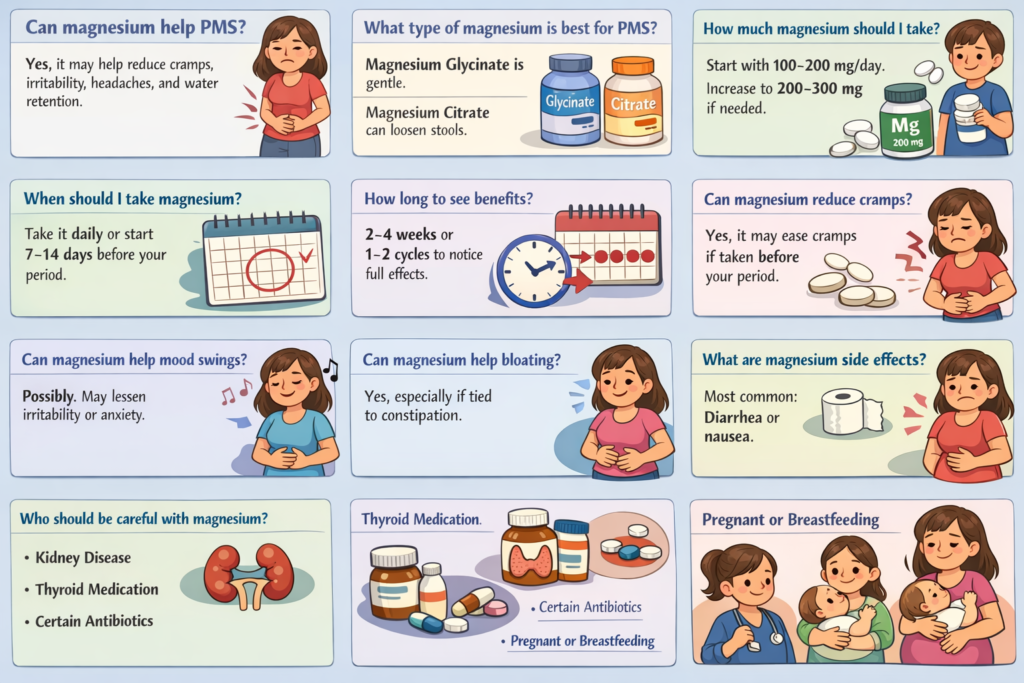
Start low: 100–200 mg/day.
Take it daily: give it 2–4 weeks.
Best timing: evening is popular, but consistency matters most.
If stools get loose: switch from citrate to glycinate or lower the dose.